
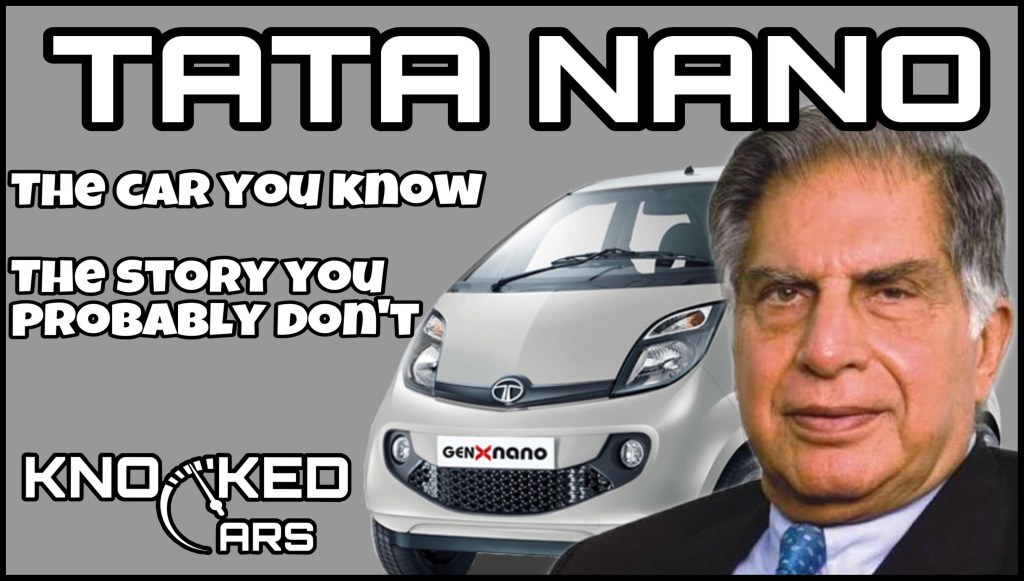
In 2008, the Indian automotive giant Tata Motors took a revolutionary step when they introduced a unique addition to their fleet, the Tata Nano. This little car had been long planned, overwhelmed by the successful launch of the mini truck Tata ace in 2005, the company saw great potential in this low budget passenger car, especially in a market that was dominated by affordable people carriers such as two wheelers.
This wasn’t the first time Tata had done something unconventional, back in 1991 they launched the ever popular Sierra which was a 3 door suv, apart from being the first ever suv from an Indian brand, the sierra was something of an icon itself, imagine a market where everyone is looking for more seating capacity, more space etc etc. (suv things you see) The sierra offered technology such as electric windows and power steering, its 5 seater 3 door layout was ahead of its time, as we now see.
Coming back to the Nano, initially marketed as the “1 lakh rupee car” or the “cheapest car” caught tremendous media attention, The opinions, comments, criticism from industry leaders and experts were harsh but on point. Many raised serious questions about the build quality and reliability of the vehicle but that didn’t stop the company from launching the car on March 2009. This venture was close to Ratan Tata’s heart, in a recent interview with India Times he said “I remember seeing a family of 4 on a motorbike in the heavy Bombay rain — I knew I wanted to do more for these families who were risking their lives for lack of an alternative.” The alternative was a car that everyone could afford, that would provide a better and a safer mode of mobility, a car that would mark the beginning of a new era.
In a bumpy start, thanks to the relocation of the manufacturing plant from West Bengal to Gujarat and some other production issues, the first batch of models were effectively delivered in the second half of 2009. Early customer response was mixed, while some said that the car itself made it possible for them to live up to their dream of owning a 4 wheeler, others claimed that it was not as practical and cheap to maintain compared to a two wheeler. These comparison to motorbikes and scooters is not something that the public came up with, Tata motors pushed this comparison as their initial marketing strategy, coupled with the infamous “cheapest car” tag. These measures however didn’t have any positive impact on the response tata nano received, with sales falling every month, it looked like there was no certain future for this little rear engine rear wheel drive car.
Many say that the tagline “cheapest car” worked against the favour of the nano, according to an article by Flop2Hit, “in India’s market, cheap translates to low quality. After all, who wants a daily driver that looks cheap and is poorly built?” To make things worse, issues with the build quality and incidents of the car catching fire started to make headlines. Not to mention, the Global Ncap crash test where the Nano scored a heroic zero stars. Tata worked towards fixing a huge majority of these issues, and also claimed that the fire was caused by an external reasonand had nothing to do with the design of the car, but the damage to the reputation was irreversible. Or was it?
In May 2015, to revive the model’s sales, Tata Motors proposed a redesign both in- and outside the car. The name was changed to GenX Nano to underline the changes; the range was offered in 21 different versions, among them a 5-speed semi-automatic transmission. The Nano now came with a 624cc petrol engine with 37bhp. Though this power output might not look impressive on paper, the Nano’s 635kg weight means that the car had plenty of performance on tap. Tata Motors claimed a fuel efficiency figure of 23.6kmpl for the manual version while the AMT was rated good for 21.9kmpl. At this price point, the Nano made perfect sense as your first car or a car that you could gift your college going children.
The marketing this time around was better as well, the brand tried to connect with the younger generation, with improved headroom and legroom, Nano now made a lot more sense, compared to 2014, the Nano’s sales grew by 36%. However it still faced serious competition from cars like the Suzuki alto 800, celerio and even Hyundai eon. It looked as if the company had got the formula right, but it was just too late and the brand name “Nano” wasn’t enough to lure the buyers of this segment. Tata Motors however decided to continue the production of the nano. A high level official said in a 2017 interview “There have been a lot of discussions around the future of Nano and the emotional connect with the vehicle, leading to several
conclusions. No decision has been taken on Nano yet as this cannot be done in isolation.” It is true that the ambition to cater the entry level market and Ratan Tata’s emotional connection kept the Tata Nano alive for a long time. Way longer than what it would otherwise have lived.
In February 2019, Tata Nano was discontinued, it would no longer be produced in the assembly line, however it would be sold on “made to order basis”. The long story slowly came to an end as the rules now required all new vehicles to have least a driver airbag, a speed warning system, a seatbelt reminder for driver and co-driver, and rear parking sensors as standard. Tata now had a couple of other cars in the hatchback category, and their sales looked promising as well.
Tata Nano was a unique chapter in the history of Tata Motors, the production costs summed up to be higher than the promised “1 lakh”, and in the first few years of production, nano didn’t make any money for the company. Despite of the low sale volumes, Tata continued the production of the Nano and brought a remarkable change to lives of many car buyers, for whom buying a car was once a dream. With over tens of thousands of Tata Nano still running on Indian Roads, it could be said that many dreams were fulfilled.
– Harshal Kiran Joshi
 Knocked Cars